Fix and Flip Financing in San Diego: Why Some Investors Use 2nd TDs Instead of Hard Money
Here is a situation that comes up more often than people talk about. An investor secures a hard money first to acquire a property - say, a distressed single-family home in El Cajon picked up at $520,000 with a $95,000 rehab budget. The hard money lender funds the acquisition but caps out at 65% of ARV, leaving the rehab costs either partially covered or entirely on the investor to figure out. Pulling cash out of savings, maxing out a business line, or sitting on a deal waiting for a refinance are all options - just not especially good ones. What some investors do instead is layer in a second trust deed behind the existing hard money first to cover the shortfall.
It is a structure that outside of private lending circles most people have never heard of, and even some experienced investors assume it’s not possible. The reality is that lenders - usually private and bridge-focused - will place a junior lien behind a hard money first under the right conditions. The loan-to-value still has to make sense, the exit has to be realistic, and the first lien holder’s terms matter. But when those pieces align, a second TD can fund rehab costs without forcing a full refinance or requiring the investor to pull equity from a separate property.
This post breaks down how that structure works in the San Diego market, what lenders actually look for before agreeing to sit in second position behind hard money, and how it stacks up against the alternative of cross-collateralizing another asset. If you are actively flipping in San Diego and have run into the acquisition-versus-rehab funding problem, this is worth reading before your next deal closes.
Key Takeaways
- Hard money loans often leave a six-figure funding gap in San Diego flips, since most cap at 65-80% LTV.
- A second trust deed placed behind a hard money first can fund rehab costs without forcing a full refinance.
- Lenders require combined LTV between 50-70% of ARV and may reject junior liens if the first lender prohibits them.
- Dual-loan carry costs can erode profits quickly; timeline overruns and budget overages amplify the financial risk significantly.
- Borrowing against a separate property solves the same gap but introduces cross-collateralization risk between otherwise independent deals.
Why Hard Money Alone Often Falls Short on San Diego Flips
Hard money loans are a common starting point for fix and flip investors in San Diego, and they make sense on paper. A lender advances funds fast, skips the red tape of conventional financing, and gets you to the closing table faster. The problem shows up after you close.
Most hard money loans cover acquisition at between 65% and 80% of the loan-to-value ratio. That means you get funded based on what the property is worth now, not what it will be worth after renovation. Rehab costs are either excluded entirely or funded in small draws that lag behind your work schedule.
In a market like San Diego, that difference between what you borrow and what you need can be giant. The median home price here has climbed past $945,000, so even a modest flip at the lower end of the market means a big buy price. Run the numbers on a 70% LTV hard money loan against a $700,000 acquisition and you are looking at roughly $490,000 in loan proceeds. If your rehab budget is $120,000, you are now short six figures before a single hammer swings.

That funding gap is not a rare edge case - it’s the default reality for most San Diego flips.
Some investors try to cover the shortfall with cash reserves. But that ties up capital that could have been working on another deal. Others attempt to negotiate higher loan amounts. But hard money lenders are usually not in the business of stretching their LTV thresholds for a single borrower. The math just does not work in their favor at that point.
There is also the draw schedule to consider. Even when rehab funds are included in a hard money loan, they are released in stages tied to completed work. That creates a cash flow squeeze because contractors want to get paid on time and materials don’t wait for your lender to approve a draw request.
What you are left with is a financing structure that gets the deal done on paper but leaves the investor scrambling to fund the renovation. In a high-cost market like San Diego, the distance between acquisition financing and total project funding is wide enough to stall or sink a flip that would otherwise pencil out well. Investors who have navigated this before often turn to equity-based strategies to scale past that gap without waiting on draw schedules or reserve depletion.
What a Second Trust Deed Actually Does in a Flip Deal
A second trust deed is a loan secured by real estate that sits behind an existing first lien on the same property. The first lender gets paid before anyone else if things go wrong. The second lender is next in line, which means they take on more danger by design.
That added danger changes everything about how second trust deeds are structured. Rates run higher than a first lien to compensate the lender for that position. Terms are short, with most deals landing in the one to two year range. A rate around 8.75% is a basic anchor to plan around for this type of financing in San Diego.
Here is the core reason investors use this structure on a flip. The first lien from a hard money lender covers the bulk of the buy and renovation budget but leaves a gap. A second trust deed comes in to fill that gap without replacing the first loan or forcing a refinance.
It functions as a separate loan that runs alongside the first one. Both liens are attached to the same property, and both lenders have a claim on it. The difference is the order in which each gets repaid.

Because the second lender carries more exposure, they look at the total debt load on the property. The combined balance of the first and second loan has to follow a basic percentage of the property’s value - this protects the second lender from being too far underwater if the deal runs into trouble. How lenders evaluate risk on a second position is worth understanding before you approach one.
For investors, the helpful effect is access to capital that would otherwise not be available through a single loan. Instead of coming out of pocket for tens of thousands of dollars to close a funding gap, a second trust deed can convert that gap into a short-term obligation with a payoff date tied to the sale.
The loan itself is simple in structure. You borrow a set amount, pay interest on it during the flip, and pay it off when the property sells. There is no complex relationship to manage and no tough restructuring involved.
What makes second trust deeds worthwhile is that they are a financing tool with steady use in the investment community - not a workaround or a last resort. What most investors want to know next is what it takes to get a lender to agree to this structure.
The Conditions Lenders Look for Before Funding a Junior Lien
Getting a second trust deed funded is not automatic. Lenders who go into second position are taking on danger and they know it, so they filter deals before saying yes.
The biggest thing they look at is combined loan-to-value ratio, or CLTV - the total of loans - the first and the second - measured against the property’s appraised value. Most junior lien lenders want that combined number to land between 50% and 70% of the after-repair value. The lower that number, the more comfortable they feel.
That math matters because it tells the lender how much equity is in the deal. If the property is worth $800,000 after repairs and the two loans together add up to $480,000, that’s a 60% CLTV. There’s enough of a cushion that if the deal goes sideways, the lender has some protection. Thin equity is what makes second position uncomfortable for a lender to take on.
The property’s post-rehab value has to be credible too. Lenders will look at comparable sales in the area to determine what the finished product is actually worth. San Diego has some strong comps in neighborhoods which can work in an investor’s favor. But lenders won’t take a borrower’s word for it.

There’s also the question of what the first lender allows. Some hard money lenders include language in their loan documents that does not permit the borrower to place a junior lien on the property without written consent. If that language is there, a second TD is off the table unless the first lender agrees; it’s worth checking before going too far with a junior lien lender.
It’s also worth knowing that some hard money lenders won’t go into second position at all. A lot of that caution traces back to the 2007-08 financial crisis, when junior lien holders absorbed losses as property values fell and first lenders took priority in foreclosures. That experience shaped how lenders think about second position to this day.
Borrower experience matters too. A lender putting money into second position wants to see that the person running the flip knows what they’re doing. First-time flippers may find second TD lenders harder to work with than experienced investors who have a track record in the market.
A San Diego Flip Scenario: Acquisition, Rehab, and a Two-Lien Funding Stack
Let’s put some numbers to this. Say an investor finds a dated single-family home in El Cajon listed at $775,000. After planned renovations, the after-repair value comes in around $1,050,000. That spread is what makes the deal worth doing.
The investor lines up a hard money first TD at 65% of the buy price. That comes to roughly $504,000 - it covers the acquisition but leaves the $125,000 rehab budget largely unfunded. That gap is where the 2nd TD enters the picture.
A private lender agrees to fund a 2nd TD of $100,000 to cover most of the rehab. The combined loan stack now sits at $604,000. Against the $1,050,000 ARV, that’s about 57.5% combined LTV - well inside what most junior lien lenders want to see. The investor brings roughly $171,000 in cash to close and covers the remaining rehab shortfall out of pocket.
| Funding Layer | Amount | Purpose |
|---|---|---|
| Hard Money 1st TD | $504,000 | Acquisition |
| Private 2nd TD | $100,000 | Rehab funding |
| Investor Cash | ~$171,000+ | Down payment and gap costs |
| Combined LTV (ARV) | ~57.5% | - |
On the timeline side, the hard money loan closes in the common 5 to 7 business day window that most experienced investors plan around. The 2nd TD can follow shortly after - some private junior lien lenders fund in as few as 7 to 10 business days once the first lien is recorded.

This matters quite a bit in San Diego’s market; deals move fast. Having funding sources lined up and ready prevents delays that could cost the investor the contract.
The investor in this scenario is not stretching LTV to dangerous levels or betting on a best-case sale price. The numbers leave room for the deal to cost more or take longer than planned without blowing up the whole project. That built-in cushion is part of what makes the two-lien stack work here.
Pulling Equity From a Separate Property: How It Stacks Up
Some investors don’t stack liens on the flip property at all. Instead, they pull a 2nd TD or HELOC from a property they already own and use those funds to cover the rehab - it’s a different structure. But it solves the same problem: capital into a deal without refinancing a primary loan.
The appeal here is easy. If you have a rental or a paid-off property sitting with equity, that equity can go to work on a new flip without touching the flip’s own title stack. Lenders usually have more appetite for a 2nd TD on a familiar, established property than on a distressed flip with a short exit timeline.
Speed is one area where it will fall short. Getting a 2nd TD approved on a separate property still takes time, and the underwriting process doesn’t shrink just because the property is clean. A HELOC can move faster once in place - but if you’re weighing your options, it helps to understand how a 2nd trust deed compares to a HELOC before committing to either. Setting one up from scratch mid-deal is not quick.
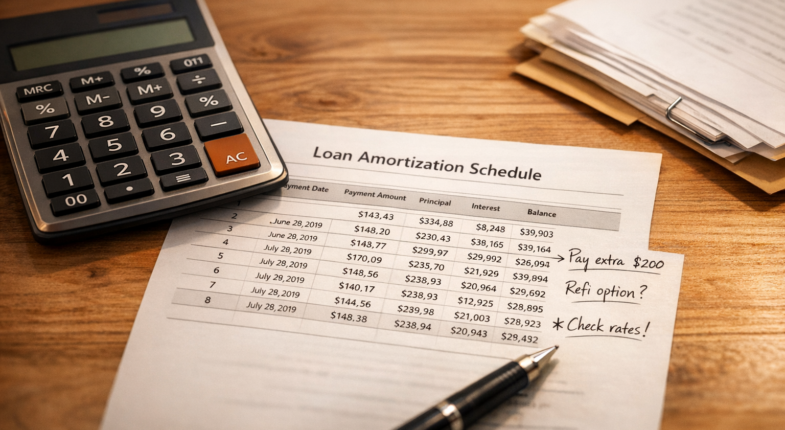
The bigger thing to remember is cross-collateralization danger. When you borrow against one asset to fund another, a bad outcome on the flip can put pressure on the property you borrowed from - it’s not a theoretical concern; it’s a direct connection between two deals that would otherwise be independent.
Some investors are comfortable with that tradeoff and others aren’t. Those who run a higher volume of deals or who want clean separation between assets prefer each property’s financing contained to itself. That way, a flip that goes sideways doesn’t create exposure elsewhere in the portfolio.
On the other hand, an existing asset can get you better terms. A well-positioned rental with strong equity is a more interesting collateral story than a flip in mid-renovation, and lenders may price the loan accordingly. If you’re deciding between approaches, pulling equity without touching your first mortgage is worth understanding in full before you choose a structure.
Neither structure is automatically better - it depends on how you manage portfolio exposure and what your lender relationships look like. If you own a clean asset with equity and a lender who moves fast, pulling from that property can be a path. If you’d prefer things compartmentalized, stacking liens on the flip itself keeps each deal in its own lane. For a side-by-side breakdown, see how a 2nd trust deed stacks up against a cash-out refinance.
It’s worth settling that question before the next deal lands in front of you, instead of making the call under deadline pressure.
Cost and Risk Factors Investors Should Weigh Before Stacking Liens
Stacking a 2nd TD on top of a hard money first means you are carrying two loans at once, and that cost piles up fast in ways that are easy to underestimate during the excitement of underwriting a deal. Hard money firsts in San Diego can run anywhere from 9% to 12% interest, and 2nd TDs reflect the elevated danger to the lender with rates usually in that same 8% to 12% range. Add origination fees and points on both loans and your financing cost before swinging a hammer can already be significant.
The holding period is where deal math gets stress-tested. Every extra month you carry two loans eats into your expected profit, so a flip that was supposed to take four months but stretches to seven can quietly close the difference between a return and a break-even outcome.
It’s helpful to run the numbers on a few different scenarios before committing. If the contractor runs 15% over budget, does the deal still hold up? If the resale value comes in $40,000 lower than your estimate, what is the outcome? These are not far-fetched situations in San Diego’s market, and a deal that pencils out under ideal conditions can look very different with even one variable going the wrong direction.

The lender taking on a 2nd TD position carries exposure because they are behind the first lien in the repayment line. That is why their rates are where they are, and it’s worth noting that the cost you pay reflects that position. You are basically compensating them for the added danger they are absorbing.
This structure works best when the equity position is strong, the after-repair value is conservative and well-supported by comps, and the renovation timeline is manageable. It tends to break down when investors underestimate costs, overestimate the resale price, or take on a project scope that’s harder to control. The financing structure does not create those problems. But it does make them more expensive when they happen.
A clear-eyed view of your total carry cost and a realistic timeline give you the best chance to make the numbers work. A padded budget and an honest ARV estimate are not optional steps when two loans are involved. Learn how the process works so you know exactly what to expect before you commit to this structure.
Building a Smarter Funding Stack for Your Next San Diego Flip
Before adding a 2nd TD to any capital stack, the questions worth asking are straightforward: Does the combined debt service still leave enough margin if the rehab runs long or the sale takes longer than expected? Is the lender on the junior lien experienced with investment property in this market, or are they applying a residential mindset to a commercial-style transaction? And is the first lender’s loan agreement silent on junior financing, or will subordinate debt trigger a due-on-encumbrance clause? These aren’t reasons to stay away from the structure - they’re the due diligence that separates investors who use it well from those who get caught off guard.
Use the scenario framework from earlier as a starting point for your own deals. Plug in your buy price, estimated rehab, ARV and carrying costs. Then model the capital stack two ways - with and without a 2nd TD - and compare net profit, cash-on-cash return and downside exposure in each. The math will tell you more than any general rule of thumb.
San Diego’s cost basis makes capital efficiency a genuine edge. Investors who know how to structure debt - not aggressively, but deliberately - can move on deals that others pass because they can’t get the equity position to work. It’s not a financing trick; it’s the well-informed decision-making that compounds over time in a market where the margins are tight and so is the competition.
FAQs
What is a second trust deed in a fix and flip?
A second trust deed is a loan secured by the same property as an existing first lien, sitting behind it in repayment priority. Investors use it to cover rehab funding gaps without refinancing their hard money first loan.
Why do hard money loans fall short on San Diego flips?
Most hard money loans cap at 65-80% LTV based on current value, not after-repair value. In San Diego's high-cost market, this often leaves a six-figure gap between loan proceeds and total project costs.
What CLTV do second TD lenders typically require?
Most junior lien lenders want a combined loan-to-value ratio between 50% and 70% of the property's after-repair value. The lower the CLTV, the more comfortable lenders are taking second position.
Can my hard money lender block a second trust deed?
Yes. Some hard money loan agreements prohibit junior liens without written consent. Investors should review their first lender's terms before pursuing a second TD to avoid triggering a due-on-encumbrance clause.
What are the main risks of stacking two loans on a flip?
Carrying two high-interest loans simultaneously increases monthly costs significantly. Timeline overruns or budget overages can quickly erode projected profits, turning a viable deal into a break-even or loss scenario.
Have Questions About Your Situation?
A 15-minute conversation can clarify whether a 2nd trust deed is the right tool for your goals.
Talk to Erik