Bridge Loans vs. 2nd Trust Deeds: How San Diego Investors Choose Between Them
In a low-rate environment, that trade-off was annoying. In today’s rate environment, it can be legitimately punishing. If you’re sitting on a San Diego investment property with a 3.5% or 4% first mortgage and you need liquidity for a value-add play, a renovation, a partnership buyout, or a bridge into your next acquisition, a conventional bridge loan San Diego lenders structure are going to need taking out the entire existing first position. Suddenly you’re trading a sub-4% loan for a new blended cost of capital that looks nothing like your original underwriting.
That’s where a 2nd Trust Deed enters the conversation as a short term real estate loan San Diego investors should at least consider before defaulting to a full refinance. A 2nd TD sits behind your existing first mortgage and leaves it untouched. You access the equity you need, the rate on your first stays where it is, and your cost of capital is calculated only on the new money - not on the entire stack.
I’ll break down how these two tools actually compare for San Diego investors, when each one makes sense, and what the numbers look like on a deal. If you already know bridge loans but haven’t thought about when they’re the wrong instrument, this is worth your time.
Key Takeaways
- Bridge loans require replacing your existing first mortgage, potentially trading a 3-4% rate for 10-13% hard money rates.
- A 2nd trust deed lets investors access equity while leaving their low-rate first mortgage completely untouched.
- In a sample deal, the 2nd trust deed’s all-in 12-month cost was nearly $30,000 lower despite carrying a higher rate.
- Second trust deeds in San Diego can fund in as little as 14 days, making them competitive with bridge loan speed.
- Choosing the wrong structure-bridge loan versus 2nd TD-depends on existing equity, first mortgage rate, and exit strategy.
Why Bridge Loans Sometimes Force a Full Refinance - and What That Costs Right Now
Most bridge loans in San Diego are structured as first-position loans. That means the lender needs to be first in line. If you already have a mortgage on the property, that mortgage has to go. You are not borrowing against your equity - you are paying off your existing loan and replacing it entirely.
That is where things get expensive fast. A lot of investors holding properties locked in rates at 3% or 4% back in 2020 and 2021. If a bridge loan pulls you out of that rate and into today’s hard money range, you could be looking at 10% to 13% on the new loan. See how 2nd trust deed rates in California compare as an alternative worth considering.
Here is what that looks like in numbers.
| Scenario | Loan Amount | Rate | Monthly Interest |
|---|---|---|---|
| Existing first mortgage | $600,000 | 3.5% | ~$1,750 |
| Bridge loan replacing it | $750,000 | 11.5% | ~$7,188 |
That gap - over $5,400 a month - is the cost of using a bridge loan when you already have a low-rate first in place. And that doesn’t factor in origination fees, which run 2 to 3 points on bridge products in this market.

The loan amount goes up too. Because the bridge has to pay off the old mortgage and then fund the new buy or renovation, the total balance is bigger compared to what you actually needed to borrow. You are carrying a bigger loan at a much higher rate, and the clock is running from day one. A 2nd trust deed can sometimes let you access that capital without disturbing your existing first.
This scenario plays out with experienced San Diego investors using equity strategically - not just newcomers. An investor with equity and a clean portfolio can still walk into this situation by picking the wrong product for a short-term need. The structure of the loan - not the borrower’s credit or income - is what drives the cost up.
How a 2nd Trust Deed Leaves Your First Mortgage Alone
A 2nd trust deed is a loan secured by a subordinate lien on a property you already own. That just means the lender takes a second position behind your existing mortgage. Your first loan stays where it is - same rate, same terms, same servicer.
That is the core appeal. If you locked in a first mortgage at 3.5% a few years ago, a 2nd trust deed lets you pull equity out without touching that loan at all. You borrow against the property a second time and your original financing stays.
Lenders are willing to take that second position because the property still backs the loan. They do price that position higher to account for the added risk. In San Diego, 2nd trust deed rates from private lenders run around 8.75% and combined loan-to-value limits usually land at 80%. So if your property is worth $900,000 and your first is at $500,000, you have room to work with.
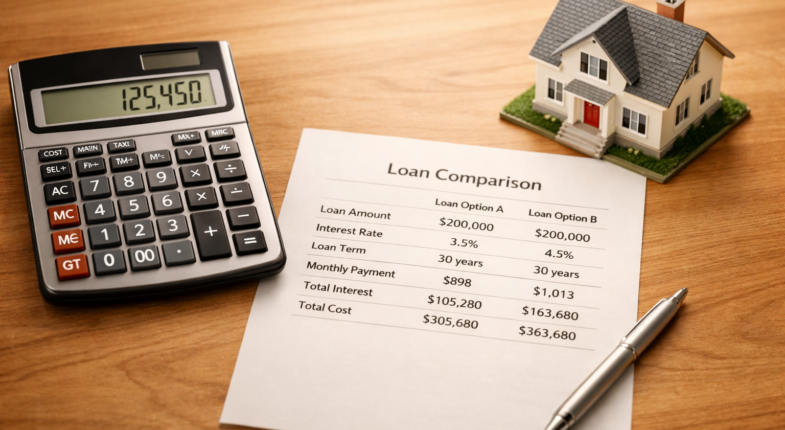
That 8.75% rate is higher compared to what a traditional first mortgage costs. But that comparison misses the point a little. You are not picking between a 2nd trust deed and a new first mortgage at today’s rates - you are picking between a 2nd trust deed and giving up the first you already have. Once you frame it that way, the math gets quite a bit more interesting.
San Diego investors use this structure to access capital for down payments on new acquisitions, renovation budgets, or short-term liquidity needs. The property does the work without forcing a reset on the underlying financing. That flexibility matters quite a bit when your existing rate is well below what the market is doing right now. Learn more about how lenders evaluate risk on a 2nd trust deed before you apply.
I’ll run the numbers on a San Diego investment property so you can see how the cost of capital stacks up in a scenario.
Deal Math: Comparing Cost of Capital on a San Diego Investment Property
Numbers tell the story better than anything else here, so let’s work through a basic example. Say you own a San Diego rental property worth $940,000 with an existing first mortgage of $520,000 at 3.75%. You need $150,000 to fund a value-add project on a second property.
With a bridge loan, a lender would refinance your entire position into a new loan - usually around $658,000 at 70% LTV. That new loan carries a rate closer to 9.5% to 10.5% in the latest hard money market. You lose your 3.75% first in the process, and that’s where the cost lives.
A 2nd trust deed pulls just the $150,000 you need, layered behind your existing first. Rates on a 2nd TD in San Diego usually run between 10% and 12% for investment property; it’s a higher rate than your first. But you’re only paying it on the new money.

Here is what a 12-month term looks like for structures on this property.
| Cost Factor | Bridge Loan (Full Refi) | 2nd Trust Deed |
|---|---|---|
| New Loan Amount | $658,000 | $150,000 |
| Rate | 10% (est.) | 11% (est.) |
| Monthly Interest | $5,483 | $1,375 |
| 12-Month Interest Cost | $65,800 | $16,500 |
| Existing First Mortgage Cost | Replaced (lost) | $1,625/mo x 12 = $19,500 |
| Total 12-Month Carrying Cost | $65,800 | $36,000 |
The 2nd TD carries a higher rate on paper. But the all-in cost is still nearly $30,000 lower over 12 months. That gap comes entirely from preserving the low-rate first mortgage instead of replacing it with expensive short-term debt. If you’re weighing your options, see how a 2nd trust deed compares to a cash-out refinance before deciding.
Transaction costs are also worth accounting for. A full refinance into a bridge loan brings origination fees, title, and escrow on the entire $658,000 balance. A 2nd trust deed only triggers those costs on the $150,000 draw, so your out-of-pocket at closing is a fraction of the alternative. Visit our loan scenarios page to see how deals like this typically come together.
Choosing the Right Structure Based on Your Equity, Timeline, and Exit
When choosing between a bridge loan and a 2nd trust deed, the decision can depend on four things: how much equity you have, what your existing first mortgage looks like, how fast you’ll have to move, and how you’re looking to get out.
Start with equity. If you have a low-rate first mortgage and enough equity to borrow against, a 2nd TD lets you tap that value without touching your first loan. That matters quite a bit when replacing a 3% or 4% first with a new loan at current rates could cost you hundreds of dollars a month. Keeping your first in place and layering a second behind it is usually the better financial move.

Speed is another factor worth considering. Bridge loans can close fast. But 2nd trust deeds in San Diego can fund in as little as 14 days through the right private lender. If you need capital faster to protect a deal or cover a gap before a sale closes, a 2nd TD can move just as fast as most bridge products.
Your exit strategy matters just as much as your entry. A bridge loan is built for short-term transitions - you sell the property or refinance, and the loan gets paid off. A 2nd TD works for that same exit and fits situations where you want to pull cash out and hold the asset long-term. Knowing your exit before you choose your structure saves you from picking the wrong product for the wrong timeline.
Getting this wrong has consequences. If you take a bridge loan when a 2nd TD would have preserved your low-rate first, you could end up with a higher blended cost and a worse cash-flow position for the rest of your hold. If you take a 2nd TD when you needed the full purchasing power of a bridge, you might not close the deal at all. Learn more about how to qualify for a 2nd trust deed before deciding which structure fits your situation.
| Variable | Points Toward Bridge Loan | Points Toward 2nd Trust Deed |
|---|---|---|
| Existing first mortgage rate | No first in place or high rate | Low-rate first worth keeping |
| Available equity | Limited equity, need full purchase financing | Strong equity position to borrow against |
| Funding timeline | Need to purchase without existing collateral | Need fast capital against an owned asset |
| Exit plan | Sale or full refinance within 12 months | Sale, refi, or long-term hold with cash-out |
The Right Loan Is the One That Doesn’t Break What’s Already Working
Before committing to either structure, it’s worth running the numbers on your deal. Model the carry costs, the exit timeline, and your first mortgage under each scenario. The path that looks easier on the surface doesn’t always look that way once the math is on the table.
The clearest next step is to talk to a lender who knows both structures and can talk about the trade-offs without a preference baked in. When you’re not being steered toward one product, you get a cleaner read on which financing actually fits the deal - and in a market as competitive as San Diego, that distinction matters.
FAQs
What is a 2nd trust deed in real estate investing?
A 2nd trust deed is a loan secured by a subordinate lien behind your existing first mortgage, allowing you to access equity without disturbing your original loan terms or rate.
When does a bridge loan make sense over a 2nd TD?
A bridge loan makes sense when you have no existing first mortgage, limited equity, or need full purchase financing for a new property acquisition.
How much can a 2nd trust deed save versus a bridge loan?
Based on the sample deal in this article, a 2nd trust deed saved nearly $30,000 over 12 months compared to a bridge loan by preserving the existing low-rate first mortgage.
How fast can a 2nd trust deed fund in San Diego?
Through the right private lender, a 2nd trust deed in San Diego can fund in as little as 14 days, making it competitive with bridge loan closing speeds.
What CLTV limit applies to San Diego 2nd trust deeds?
Private lenders in San Diego typically cap combined loan-to-value at 80% for 2nd trust deeds on investment properties.
Have Questions About Your Situation?
A 15-minute conversation can clarify whether a 2nd trust deed is the right tool for your goals.
Talk to Erik