How to Cash Out Equity on a Rental Property in California Using a 2nd Trust Deed
A 2nd trust deed - or 2nd TD - is a subordinate lien placed behind your first mortgage. It gives you access to the equity you’ve built up in the form of a lump-sum loan. But your original financing stays as it is. For investors who locked in low rates over the past decade, this distinction matters enormously. You keep the first mortgage you have and you borrow against the equity separately.
But rental property isn’t the same as a primary residence in the eyes of lenders, and the rules are different. Non-owner-occupied properties carry their own loan-to-value limits, their own underwriting considerations, and a legal classification under California law that can affect how the transaction is structured. The rental income on the property also factors in - not just in qualifying for the loan, but in how lenders review your ability to repay it.
I’ll walk through how a 2nd trust deed works as an equity loan on a rental property, what California investors need to know before applying, and the things that matter when deciding if it makes sense for your situation.
Key Takeaways
- A 2nd trust deed lets California landlords access equity without replacing their existing low-rate first mortgage.
- Investment properties face tighter CLTV limits-hard money lenders typically cap at 60-65%, versus 80% for conventional lenders.
- Rental property equity loans are classified as business purpose loans in California, placing them outside standard consumer protection rules.
- Hard money 2nd TDs carry 10-15% annual interest rates and short 6-24 month terms, requiring a clear exit strategy.
- California’s non-judicial foreclosure process takes roughly 200 days from first notice, but lenders can initiate it after missed payments.
What a 2nd Trust Deed Actually Does for a Rental Property Owner
A 2nd trust deed is a loan secured by property that already has an existing mortgage on it - it sits behind that first loan in terms of priority, which means if the property were ever sold or foreclosed, the first lender gets paid before the second. The borrower receives a lump sum of cash and repays it over time, just like any other loan.
For a rental property owner, the value of this is straightforward. You tap into the equity you’ve built without touching your existing mortgage at all. Your first loan stays as it is - same rate, same terms, same payment.
That last part matters quite a bit right now. Many landlords locked in first mortgages at 3% or 4% a few years ago and have no interest in replacing them with a new loan at today’s higher rates. A cash-out refinance would do that - wipe out the original loan and replace it with a bigger one at a worse rate. A 2nd trust deed lets you pull cash out while your first mortgage sits untouched.
The equity in your rental property is the collateral here. Lenders look at how much the property is worth, subtract what you still owe on the first mortgage, and lend against a part of what’s left. If your rental is worth $800,000 and you owe $400,000 on the first, you have significant equity to work with - and a 2nd TD is one way to access it in a lump sum.

Landlords use that cash for all kinds of things. Some put it toward another investment property. Others use it to fund renovations on their existing portfolio or to cover large costs without pulling from reserves.
The important thing to know is that a 2nd trust deed is a separate loan from a separate lender - it has its own rate, its own repayment schedule, and its own approval process. That distinction shapes everything about how these loans work on investment properties in California.
How Investment Property 2nd TDs Differ From Owner-Occupied Ones
Lenders treat rental properties as a higher credit risk than primary residences, and that shapes almost everything about how they underwrite a 2nd trust deed on one. The thinking is straightforward: if a borrower hits financial trouble, they are more likely to protect the roof over their head than a property they rent out to someone else.
That risk profile changes the loan terms in several ways. Interest rates on investment property 2nd TDs run higher compared to what you would see on an owner-occupied second. Lenders also apply tighter loan-to-value limits and want to see stronger borrower financials before they approve anything.
The documentation process is more involved too. A lender will want to look at rent rolls, lease agreements, and sometimes a history of rental income to verify that the property actually performs. For a primary residence, income documentation is mostly about the borrower’s job and personal finances - but with a rental, the property itself goes under the microscope.
Debt-to-income calculations work a little differently as well. Some lenders will credit a part of the rental income to help offset the new loan payment, and others are more conservative about how much of that income they will count - it can depend on the lender and the loan program, so it pays to know where a lender stands before getting deep into the process.
Many investors approach this process with expectations built around their experience with owner-occupied financing. That difference between what they expect and what actually happens can slow things down if they are not prepared. The scrutiny is not punitive - lenders are pricing and underwriting for the risk in front of them.
Hard money and private lenders are more flexible on some of these points than conventional or bank lenders. They usually focus more on the equity in the property than on the borrower’s income or credit profile. That flexibility comes at a price though, usually in the form of higher rates and shorter loan terms.
CLTV Limits That Apply to Non-Owner-Occupied Properties in California
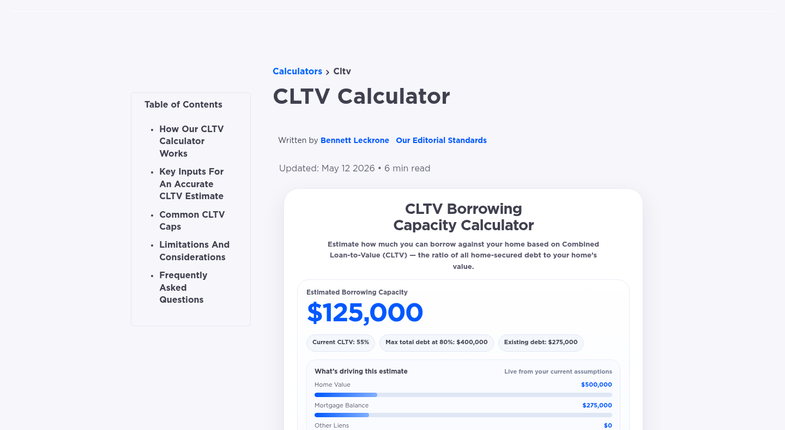
Lender risk differences have a direct effect on how much equity you can pull out. The number that controls this is your combined loan-to-value ratio, or CLTV - it adds up everything you owe across all loans on the property and compares that total to what the property is worth.
For rental properties, most conventional lenders cap CLTV at around 80%. That limit gets more restrictive in practice. Hard money lenders in California - the ones more likely to approve a 2nd trust deed on an investment property - like to set their limits tighter, usually between 60% and 65% CLTV.
Here is an easy example to make that concrete. Say you own a rental property in California worth $500,000 and you still owe $250,000 on your first mortgage. That leaves you with $250,000 in equity on paper. At 65% CLTV, the total debt allowed on the property would be $325,000. Since your first mortgage already accounts for $250,000 of that, you might borrow as high as $75,000 through a 2nd trust deed.
Run the same scenario through an 80% CLTV limit and the numbers look different. The total allowable debt rises to $400,000, which means you might access as high as $150,000. That is a meaningful difference depending on what you need the funds for.
| CLTV Limit | Property Value | First Mortgage | Max Total Debt | Max 2nd TD |
|---|---|---|---|---|
| 65% | $500,000 | $250,000 | $325,000 | $75,000 |
| 80% | $500,000 | $250,000 | $400,000 | $150,000 |
Your existing first mortgage balance has a big impact here. The higher that balance is relative to the property value, the less room you have to add a second loan - regardless of which CLTV limit applies. Knowing your latest equity position before approaching a lender matters for this reason.
Why California Law Classifies This as a Business Purpose Loan
When you pull equity from a rental property, California treats that transaction differently than it would a loan on your primary home. The legal term for this is a “business purpose loan,” and it changes quite a bit about how the process works.
The classification can depend on intent. If the property generates income or is held as an investment, the loan is considered business purpose by nature. You don’t have to be a corporation or an LLC to qualify for that label - individual investors get it too.
This matters because California’s consumer protection laws for residential mortgages don’t apply to business purpose loans. Rules around rescission rights, disclosure timelines, and borrower protections under the California Homeowner Bill of Rights are written for owner-occupied homes. A rental property loan sits outside that framework.
That’s actually not a bad thing for investors. The process tends to move faster without the extra compliance layers that accompany consumer loans.
There’s a newer development worth learning about. California Assembly Bill 130 was signed in 2025 and added language to California Civil Code Section 2924.13 - it introduced specific requirements for subordinate mortgages - meaning second trust deeds fall under its scope. The law was written to add transparency around junior lien positions on residential properties used for investment.
In practice, AB 130 means lenders on a second trust deed now have to follow updated procedural steps before moving forward with a nonjudicial foreclosure on these loans - it doesn’t block lenders from foreclosing. But it does put a clearer process in place to document that steps were taken. Learn more about how junior lien positions are managed and what risks they carry.
For investors, the helpful takeaway is straightforward. You’re working within a business lending framework - not a consumer one, so expect fewer hand-holding disclosures and more direct lender communication. At the same time, AB 130 adds a layer of structure around how your second lien can be enforced, which creates more predictability for both sides of the transaction.
Understanding this classification helps clarify what laws apply to your loan and why your lender is handling things the way they are. If you want to see how San Diego investors use 2nd trust deeds on investment properties, that context can help frame your own approach.
Interest Rates, Loan Terms, and What Lenders Actually Charge
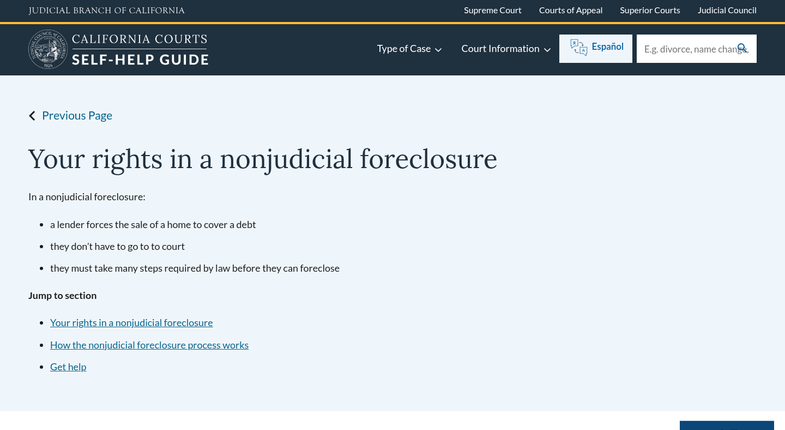
Hard money lenders on 2nd trust deeds in California usually charge between 10% and 15% interest per year; it’s not a small number, and it’s worth sitting with for a bit before you move forward with an application.
The reason rates run this high comes down to position. A 2nd trust deed sits behind the first mortgage in line for repayment if something goes wrong. Lenders take on more exposure because of that, and the rate goes up with it. In practice, expect a 2nd TD to cost you roughly 2 to 4 percentage points more than a comparable first mortgage would.
Loan terms are short by design. Most hard money 2nd TDs are structured for 6 to 24 months instead of the 15 or 30 years you’d see on a conventional loan. The idea is to use the funds for a job and then refinance or pay the loan off once that goal is met.

Many lenders also set a floor on how much they’ll lend. A $100,000 minimum is common in California. If the equity you want to pull out falls below that threshold, some lenders will decline the deal entirely because the economics don’t work on their end.
| Loan Feature | Typical Range |
|---|---|
| Interest Rate | 10% - 15% per year |
| Rate Premium Over 1st Mortgage | 2 - 4 percentage points |
| Loan Term | 6 - 24 months |
| Minimum Loan Amount | $100,000 (common floor) |
Before you apply, it helps to run a quick cost-of-capital check. Take the rate you expect to pay and compare it to what the borrowed funds will realistically return. If you’re pulling cash out to fund a renovation that raises rents or builds equity in another property, the math may work in your favor. If the use of funds is less concrete, the numbers deserve a harder look.
How Rental Income Shapes the Exit Strategy Evaluation
Hard money lenders on short-term 2nd trust deeds are not running your debt-to-income ratio the same way a bank would. What they want to know is easier: how are you going to pay this loan back?
That question leads directly to exit strategy. A lender will want to see a basic plan - a refinance into a long-term loan, a property sale, or rental income that reliably covers the monthly payments, and each path gets evaluated differently, and rental income is not necessarily the easy answer you expect it to be.
When you point to rental income as your exit, lenders look at whether that income is stable enough to sustain the extra payment from the 2nd trust deed. They want to see a lease in place and payment history if possible. A verbal promise that the property will stay occupied is not going to move the needle.
Vacancy is a consideration here. If your tenant moves out and the property sits empty for two or three months, can you still make payments? Lenders imagine this because they have seen borrowers underestimate carrying costs on rental properties. You don’t have to prove immunity to vacancy. But you do need to show you have a financial cushion to manage it.
A refinance exit tends to be the cleanest path in the lender’s eyes - it shows a defined endpoint and doesn’t depend on market conditions or tenant behavior in the same way. That said, it does depend on your ability to qualify for new financing later, so lenders may ask questions about your credit profile and the property’s long-term value. If you want to understand which equity options get you funded faster, that comparison is worth reviewing before you commit to a path.
A sale exit works too. But lenders get cautious about how loose that timeline is. California property markets can move slowly depending on the area, so a balloon payment coming due in 12 months should have a credible sales strategy behind it. Some investors weighing their options also look at bridge loans versus 2nd trust deeds when timing a sale.
Lenders are not just approving a loan amount - they are approving a repayment story. The stronger that story is, the smoother the approval process tends to go.
Foreclosure Risk and the California Timeline Investors Should Know
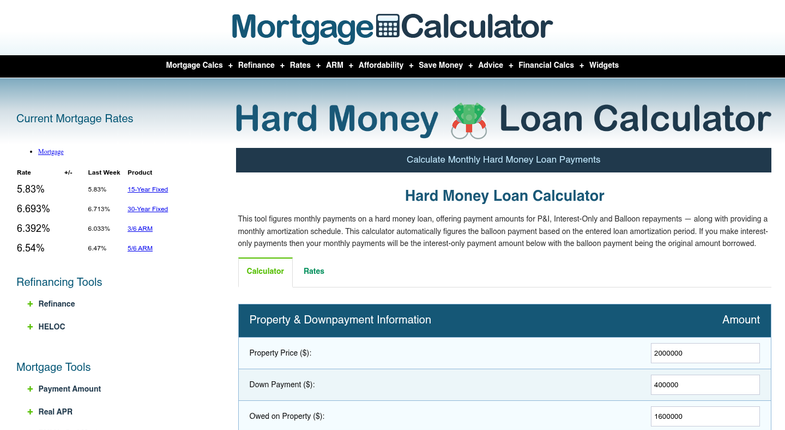
Missing payments on a 2nd trust deed has consequences. The lender in second position has the right to start foreclosure proceedings, and California’s non-judicial foreclosure process gives them a path for it without going through the courts.
That process usually takes 200 days or more from the first notice to a trustee sale. That might sound like a long runway. But it moves faster than most borrowers expect once it begins. The timeline is set by state law and doesn’t leave much room to stall.
For the borrower, those 200 days represent a window to catch up, refinance, or sell the property before it goes to auction. Acting early in that window matters quite a bit. Waiting until the final weeks leaves far fewer options on the table.
For the lender, being in second position can add a layer of difficulty. If the borrower also falls behind on the first trust deed, the first lender may start their own foreclosure. A successful foreclosure by the first lender can wipe out the second lien entirely, which means the 2nd TD holder could walk away with nothing. Understanding how second liens are affected in these situations is something every borrower should do before committing.
That is one reason why private lenders in second position look at the combined loan-to-value ratio before they agree to fund, and why they price that danger into the interest rate. The difference between what the property is worth and what’s owed on the first loan is the 2nd lender’s protection.
From the borrower’s side, it’s worth being clear-eyed about what a 2nd trust deed payment can add to monthly obligations. Rental income can help carry that load. But vacancies happen and costs come up. Having a plan for a slow month is responsible, not pessimistic. You can also review real loan scenarios to see how other borrowers have structured this financing.
California does give borrowers statutory protections throughout the foreclosure timeline, like a reinstatement period where you can bring the loan current and stop the process. Knowing those rights before signing anything is part of making a well-informed choice about this financing.
Is a 2nd Trust Deed the Right Move for Your California Rental?
Before moving forward, take an honest look at three things: how much usable equity you actually have after accounting for your first mortgage, how reliably your rental income covers the extra debt service, and what your exit plan looks like when the loan matures. A strong answer to all three separates a strategic financing choice from one that creates pressure later.
If the numbers hold up, the next step is straightforward. Get a current valuation of the property so you know what you are working with, then connect with a private lender experienced in California second trust deeds. The right lender will underwrite the deal faster and help you structure terms that meet your timeline. A second trust deed is a tool - a helpful one when the job calls for it. You want to make sure that the job does.
FAQs
What is a 2nd trust deed on a rental property?
A 2nd trust deed is a subordinate loan secured by your rental property's equity, sitting behind your existing first mortgage. It gives you a lump sum of cash without disturbing your original loan terms or interest rate.
How much equity can I access with a 2nd TD?
It depends on your combined loan-to-value ratio. Hard money lenders typically cap at 60-65% CLTV for investment properties, while conventional lenders may allow up to 80%, meaning the accessible amount varies based on your first mortgage balance.
What interest rates do 2nd trust deeds carry?
Hard money lenders typically charge 10-15% annual interest on investment property 2nd trust deeds, roughly 2-4 percentage points higher than a comparable first mortgage, reflecting the increased risk of the subordinate lien position.
Is a rental property 2nd TD a business purpose loan?
Yes. California classifies equity loans on investment properties as business purpose loans, placing them outside standard consumer mortgage protections. This typically speeds up the process but removes certain borrower safeguards that apply to owner-occupied loans.
What happens if I miss payments on a 2nd trust deed?
The lender can initiate California's non-judicial foreclosure process, which takes roughly 200 days from first notice to trustee sale. Acting early in that window is critical, as waiting limits your options significantly.
Have Questions About Your Situation?
A 15-minute conversation can clarify whether a 2nd trust deed is the right tool for your goals.
Talk to Erik