1031 Exchange Gap Financing: How a 2nd Trust Deed Can Bridge Identification Deadlines
Under IRC Section 1031(a)(3), a valid like-kind exchange requires two things: you must formally identify your replacement property within 45 days of closing on the relinquished property, and you must close on that replacement property within 180 days. These deadlines interact in ways that catch investors off guard. Identifying a property on day 44 leaves you with a compressed runway to close - sometimes as few as 136 days, which is plenty until due diligence, title, financing, and negotiations start consuming that margin. If either deadline slips, the exchange fails entirely. That means federal capital gains tax, depreciation recapture taxed as income, and - for higher earners - the 3.8% net investment income surtax all come due at once on the full gain from your original sale. For investors, that’s a six-figure tax event that wipes out years of equity growth in a single filing season.
This is the scenario where 1031 exchange bridge financing earns its place in an investor’s strategy. When conventional lending can’t move at the speed the exchange is going to need, a short-term capital solution can bridge the difference between where you are and where you’ll have to be. And one of the most helpful tools available - especially for California investors - is a 2nd trust deed on an existing property you already own to generate the capital needed to close on the replacement property before the deadline hits.
What follows is a helpful overview of how that financing structure works, why 1031 exchange private money in California is usually the only instrument fast enough to solve this problem, and what investors need to know before they go after it. If you’re inside your identification window and the capital isn’t lined up, this is worth reading.
Key Takeaways
- IRC Section 1031 requires replacement property identification within 45 days and closing within 180 days, with no IRS extensions available.
- A 2nd trust deed on an existing property converts built-up equity into closing capital without selling that asset.
- Private lenders close 2nd trust deed loans in 7-14 days, while conventional banks typically require 30-60 days.
- Identification failure rates climbed from 6% to 9% in 2025, reflecting growing difficulty completing exchanges within deadlines.
- Investors should engage a private lender and notify their Qualified Intermediary within the first 10-15 days after selling.
Why the 45-Day Identification Window Creates a Capital Crunch
Under IRC 1031(a)(3), once you close on the sale of your relinquished property, a strict countdown begins. You have 45 days to formally identify your replacement property in writing - and the IRS does not grant extensions for cold markets, slow sellers, or financing delays.
Most investors use the three-property rule, which lets you identify up to three possible replacement properties regardless of their value. If you want to cast a wider net, the 200% rule lets you identify more properties as long as their combined fair market value does not exceed twice the value of what you sold. That sounds flexible. But in practice it still means committing to targets with confirmed financing in place.
Here is where the timeline gets uncomfortable. Investors who take the full 45 days to nail down the right property are left with only 135 days to close. That closing window has to cover due diligence, title work, lender underwriting, appraisals, and anything else that comes up. Traditional lenders are not built for that pace, and their timelines can eat up the runway you have left.
The financing pressure is getting worse. Accruit Technologies reported that identification failure rates climbed from 6% to 9% in 2025, which suggests more investors are running out of time before they can get a deal across the finish line.

The core tension is this: you want to wait until you find the right replacement property. But waiting uses up the days you’ll have to secure financing and close. Move too slowly on identification and you run out of time. Identify too early without financing lined up and you risk not being able to close.
That gap between identifying a property and having the capital to close on it is the problem that gap financing was built to help with.
How a 2nd Trust Deed Turns Existing Equity Into Closing Power
A 2nd trust deed is a loan secured by a property you already own and it sits behind your first mortgage in terms of priority. You don’t sell the property to access the funds. The equity you’ve built up can become collateral and you receive capital you can put toward a replacement property buy.
This is the structural reason it works in a 1031 context. Your relinquished property has already sold and the proceeds are sitting with a qualified intermediary - locked up until closing. A 2nd trust deed on a separate property lets you pull capital from a different source to cover the difference between what your intermediary holds and what the replacement property actually costs.
It unlocks value that’s already there but not doing much work for you right now.
This works best for investors who have a free-and-clear property or one with a low loan balance relative to its value. The more equity you have in that asset, the more you can borrow against it and the stronger your position to close on a replacement property within the 45-day window.
No sale is needed and no partnership restructuring is needed. The existing property stays in your portfolio as-is. The loan funds get deployed toward the buy and once the 1031 exchange closes your intermediary funds are released to pay off that 2nd trust deed if that’s how you’ve structured it. Before taking that step, having a clear plan for how you’ll pay it off is worth thinking through early.
What makes this work on a structural level is that the collateral is a hard asset with a known value. That gives a lender something concrete to underwrite against and it gives you a clear path to capital that isn’t tied to the exchange itself. The two transactions stay independent of each other, which keeps your 1031 compliant and your timeline intact. Understanding how lenders evaluate risk on a 2nd trust deed can help you walk into that conversation prepared.
Why Conventional Lenders Can’t Move Fast Enough for a 1031 Deadline
The 2nd trust deed strategy works on paper. But it usually has to come from a private lender instead of a bank. That is the reality of how conventional underwriting is built.
Banks move at the speed of process. A standard conventional loan means a formal appraisal, income documentation, debt-to-income analysis, and multiple rounds of committee review. From application to funding, you’re usually looking at 30 to 60 days, and that’s when everything goes smoothly. A 2nd lien position can add additional scrutiny that stretches that timeline further.
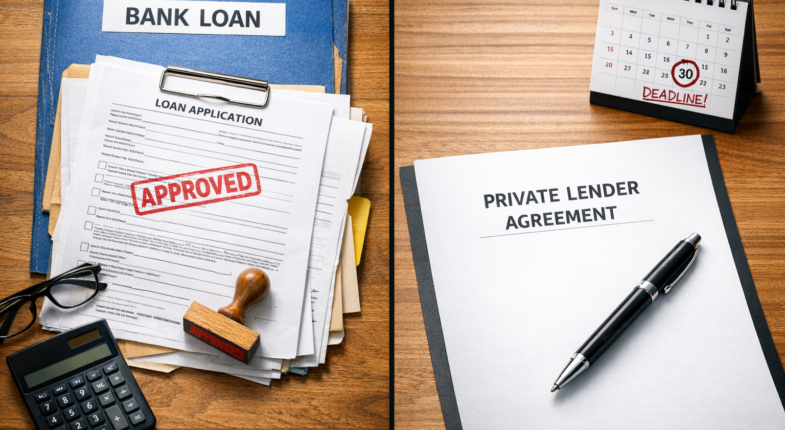
The 180-day statutory deadline doesn’t flex for anyone. There’s no extension available because your lender is still in underwriting, and the IRS doesn’t account for institutional delays. So when a replacement property needs to close in the next two weeks to stay inside the exchange window, a conventional lender is structurally not set up to help.
Private money operates differently. A private lender makes decisions based primarily on equity and collateral instead of running every number through a long approval chain. That lets 1031 exchange private money in California close in 7 to 14 days - sometimes faster when the deal is straightforward.
| Lender Type | Typical Close Time | Primary Approval Factor |
|---|---|---|
| Conventional Bank | 30 to 60 days | Income, credit, committee review |
| Private / Hard Money | 7 to 14 days | Equity and collateral value |
Speed matters here because the 45-day identification window and the 180-day close deadline run on a fixed clock from the day you sell. A lender who needs six weeks just to schedule an appraisal is not a viable option when your deadline is hard and absolute.
What Lenders Actually Look at When Underwriting a 2nd TD for Exchange Financing
Private lenders move fast. But they’re not skipping due diligence. They run a tighter, more focused review than a bank would. Knowing what they look at helps you figure out if you’re a strong candidate before you make a single call.
The first thing any private lender checks is your equity position in the collateral property. They want to see how much cushion exists between what you owe and what the property is worth. Combined loan-to-value - your existing first mortgage plus the new 2nd trust deed - is the number they care most about. Most private lenders want that combined figure to stay under 65% to 70%.
California investors fare well here. Decades of appreciation mean properties carry big equity even with an existing mortgage. That equity is what makes the whole strategy work.
Your exit strategy matters just as much as the equity. Private lenders want to know how you’re planning to pay them back and on what timeline. A clean answer - like selling the relinquished property at close of the exchange - gives lenders confidence. A vague answer slows everything down.
The physical condition of the collateral property gets looked at too. A lender won’t put a 2nd trust deed on something with deferred maintenance that would be hard to sell quickly if things went sideways. And title needs to be clean - any liens, disputes, or encumbrances can stall or end the deal entirely.
A few things can disqualify a deal fast. If the collateral property is already in escrow, most lenders won’t touch it as security. Too little equity is another quick disqualifier. These aren’t edge cases; they come up enough that it’s worth checking before you get your hopes up.
The good news is that this is a short checklist. If your equity is strong, your title is clean, and you have a defined payoff plan, you’re already most of the way there.
Steps to Line Up 2nd TD Bridge Financing Before Your Deadline Hits
The worst time to start looking for a lender is day 44. At that point, you have one day left in your identification window and almost no room to move. Start this process once you know your relinquished property is under contract.
First, find a private lender who has actually done 1031 exchange bridge financing before. This is not the time to work with a person who needs to Google what a Qualified Intermediary is. Ask directly if they have funded 2nd trust deed loans inside a 1031 timeline and how fast they can close.
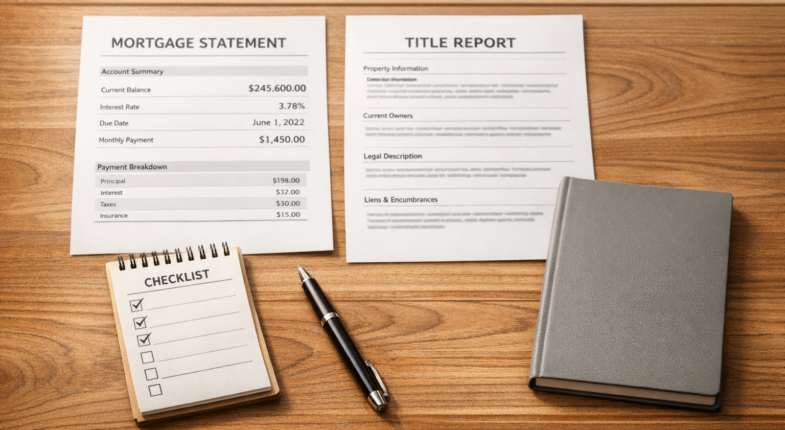
Once you have a lender in mind, pull your documents together immediately. You are going to need a latest mortgage statement, a recent title report, and basic facts about the replacement property you’re looking to buy. The faster you hand these over, the faster a lender can tell you what they can do.

Loop in your QI early too. Your Qualified Intermediary controls the exchange funds and needs to know that a bridge loan is part of the picture. They can help structure the repayment so it does not trigger a taxable event.
Know your exit strategy. Most 2nd TD bridge loans in this context get repaid one of two ways. The first is when the replacement property closes and permanent financing gets put in place. The second is when any remaining proceeds from the relinquished property sale are released.
Run through this short sequence to stay on track.
| Step | Action | When to Do It |
|---|---|---|
| 1 | Identify a 1031-experienced private lender | Day 1-10 |
| 2 | Gather title, mortgage, and property documents | Day 1-15 |
| 3 | Notify your QI about the bridge loan structure | Day 1-15 |
| 4 | Confirm repayment plan with lender and QI | Before funding |
| 5 | Close the bridge loan and meet your deadline | Before day 45 |
The Clock Is Real - But So Is the Solution
Too many investors have walked away from deferred tax liability basically because they did not know private gap financing was available, or they assumed it was too difficult to arrange in time. The mechanics are easy - engage the right lender early. The key word is early. Waiting until day thirty to call a private lender while your qualified intermediary is already holding funds is a position no one wants to be in. Those conversations should happen in parallel - your QI and your private lender on the same timeline - not one after the other.
Investors who close on time in a 1031 exchange are not the ones who got lucky. They are the ones who mapped out their financing contingencies before the relinquished property ever went under contract. A second trust deed is not a last resort - it’s a legitimate, strategic tool that belongs in the planning conversation from the start. If you are approaching a 1031 exchange and there’s any question about how you’ll cover the replacement property buy, reach out to a private lender experienced with exchange timelines now - not after the identification clock is already running.
FAQs
What is 1031 exchange gap financing?
1031 exchange gap financing is short-term capital used to bridge the difference between funds held by a Qualified Intermediary and the full cost of closing on a replacement property before the IRS deadline expires.
How does a 2nd trust deed help in a 1031 exchange?
A 2nd trust deed lets investors borrow against equity in an existing property to generate closing capital without selling that asset, keeping the 1031 exchange compliant while meeting tight deadlines.
Why can't conventional lenders meet 1031 exchange deadlines?
Conventional banks typically take 30-60 days to close due to income verification, appraisals, and committee review. The IRS grants no extensions, making banks structurally incompatible with hard exchange deadlines.
How fast can private lenders close a 2nd trust deed?
Private lenders focus on equity and collateral rather than lengthy approval chains, allowing them to close 2nd trust deed loans in 7-14 days - fast enough to meet 1031 exchange deadlines.
When should investors start arranging bridge financing?
Investors should contact a private lender within the first 10-15 days after selling their relinquished property, not on day 44. Early action preserves enough time to fund and close before deadlines hit.
Have Questions About Your Situation?
A 15-minute conversation can clarify whether a 2nd trust deed is the right tool for your goals.
Talk to Erik