Can You Get a 2nd Trust Deed with Imperfect Credit? What Actually Matters to Private Lenders
This is one of the more common situations we see among California homeowners exploring a 2nd mortgage bad credit California solution. The borrower isn’t in financial freefall - they’re a person with a tough credit history, a legitimate use for the funds, and actual equity sitting in a California property. What they’re missing is a lender whose underwriting actually takes in that full picture.
Private lenders - sometimes called hard money lenders - approach second trust deed lending differently. Credit score is part of the conversation. But it isn’t the whole conversation. What gets weighted more heavily is the equity cushion in the property, the loan-to-value ratio, the condition of the asset, and whether there’s a credible path to repayment. A hard money second mortgage is underwritten against the asset first and the borrower second - which changes the calculus considerably for borrowers with strong equity but imperfect credit.
That said, this post won’t tell you credit doesn’t matter, because it does. What it will do is show you where it matters, where it doesn’t, and how private lenders actually weigh these things against each other - by the end, you’ll have a clearer sense of whether your situation - your equity position, your property, your exit strategy - puts you in range for this financing, even with the credit score you have.
Key Takeaways
- Private lenders prioritize property equity over credit scores, asking what happens if the borrower stops paying rather than focusing on payment history.
- Most private lenders cap combined loan-to-value at 60-65%; strong equity can offset a low credit score, but not indefinitely.
- Property condition matters significantly-distressed or non-warrantable properties reduce lender confidence even when equity looks sufficient on paper.
- A clear exit strategy (refinance, sale, or expected income) is required, since private second mortgages typically run only six months to two years.
- Credit scores below 550 close most private lending doors; the 575-650 range remains workable when equity is strong.
Why Private Lenders Think Differently Than Banks on Second Mortgages
Banks are built around one core question: can this person reliably make payments? That means they lean hard on credit scores, debt-to-income ratios, and employment history before they look at anything else - it’s a payment-first model, and it works for borrowers with clean financial records.
Private lenders ask a different question. They want to know what happens if the borrower stops paying. That single difference in thinking changes everything about how they review a loan application.
Most private lenders are private investors or small lending funds. They’re putting their own capital to work, and they protect it through the property itself instead of through your credit history. The equity in your home is their safety net, so they prioritize collateral above all else. Your payment behavior over the last seven years matters far less to them compared to what the property is worth right now.
That’s why the private lending model exists. When a borrower has genuine equity in their home but a credit score that a bank won’t touch, there’s still tangible security backing the loan. A private lender can hold a second lien position on a property and feel reasonably protected as long as that equity cushion is large enough.
For a borrower in California with imperfect credit, this distinction is the whole ballgame. The state has a large and active private lending market because property values create the equity that makes collateral-based underwriting work. A lender in this space isn’t ignoring your credit score to do you a favor - they’re solving a different equation than a bank would.
Understanding this model helps you approach the process on the right terms. You’re not convincing a lender to forget your flaws. You’re showing them that the asset makes the loan worth their capital.
The LTV Equation: How Much Equity Actually Overcomes a Low Credit Score
Combined loan-to-value, or CLTV, is the number that private lenders watch most closely - it adds up everything you owe against the property - your first mortgage, the new second - and expresses that as a percentage of the home’s value. Most private lenders cap CLTV between 60% and 65%, and some lenders are more conservative than that.
Let’s talk about what that looks like in dollars. Say your home is worth $600,000 and you have a $300,000 first mortgage. That first mortgage alone sits at 50% CLTV. If a lender caps at 65%, you have as high as $90,000 of room left to work with on a second. At a 60% cap, that shrinks to $60,000. The math is easy. But it has a ceiling.
More equity means a smaller difference between what you owe and what the property is worth, and that’s what gives a private lender confidence. A lower credit score doesn’t disappear from the conversation. But it carries less weight when the lender has a strong equity cushion to fall back on if things go wrong.
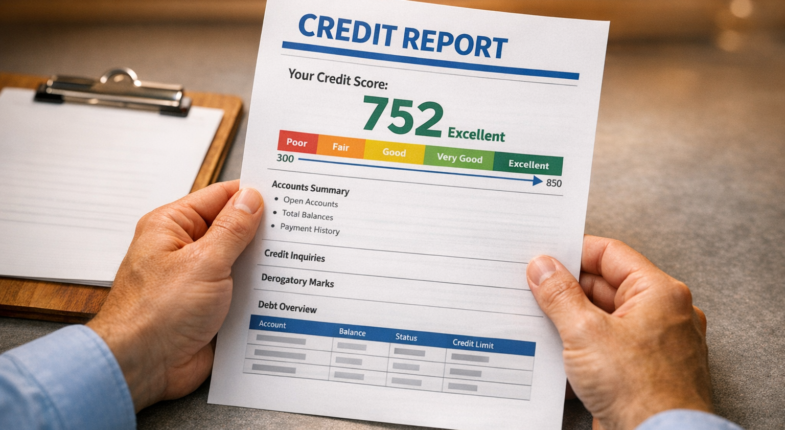
That said, there’s a point where a low credit score stops being offset by equity alone. Most private lenders get uncomfortable once a borrower’s score drops into the mid-500s or below. At that level, the lender isn’t just looking at a damaged credit history - they’re looking at a pattern that raises questions about repayment.
It’s worth being honest about where the math stops working. If your CLTV is already close to or above 65% and your credit score is in the low 500s, equity won’t carry you across the finish line on its own. The two things work together, and when both are stretched thin at the same time, a private lender has very little room to say yes.
What Else Goes Into the Yes or No: Property Condition and Exit Strategy
Equity gets you in the door. But two more things shape the final answer: what condition the property is in and how you’re looking to pay the loan back. Private lenders weigh both of these - even when your loan-to-value ratio looks good on paper.
Property condition matters more than you might expect. A distressed property - one with structural problems, deferred maintenance, or title complications - raises the lender’s risk regardless of how much equity sits in it. The concern is simple: if you default, the lender needs to be able to recover their money from that asset. A property that would be hard to sell or refinance makes that harder to guarantee.
Non-warrantable properties carry a similar concern. Certain condos, mixed-use buildings, or properties with legal complications can all give a private lender pause even at a conservative combined loan-to-value - it’s worth learning about where your property stands before you apply.
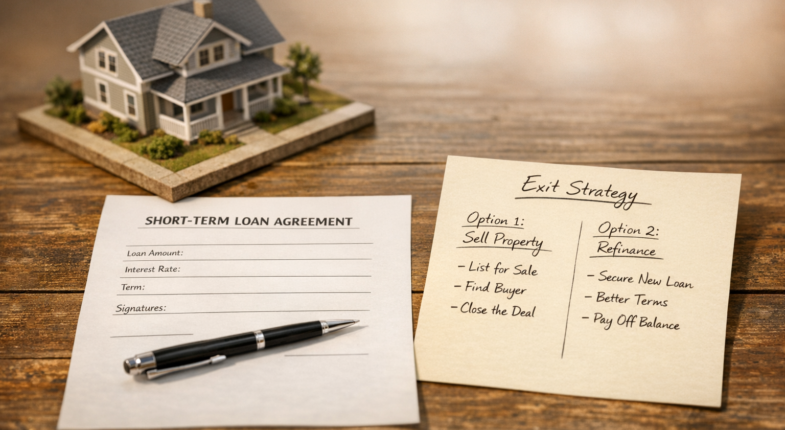
Exit strategy is the other piece, and with private loans it’s not optional. These loans are short by design - terms of six months to two years are all too common in this space. At rates that run between 10% and 15%, the carrying cost piles up fast if you don’t have a path to pay the loan off.
Lenders want to see a basic answer to one question: how does this loan get repaid? The most common answers are a planned refinance into a conventional loan, the sale of the property, or income that will come in before the term ends. The stronger your answer is, the more confidence it gives a lender.
Consider your exit strategy before you submit your application. A borrower with a 620 credit score and a repayment plan is a better candidate than one with a 680 and no plan at all.
Where Credit Score Still Matters (And the Honest Threshold to Know)
Private lenders do lean heavily on equity. But that doesn’t mean your credit score disappears from the conversation- it still shows up, just not as the deciding factor it would be at a bank.
Most private second mortgages go to borrowers at 650 and above, with the bulk of approvals sitting at 700 or higher. Borrowers in the 580 to 640 range are workable for lenders and deals do get done in that zone. Drop into the 500s, though, and the pool of willing lenders gets noticeably smaller.
The number itself is only part of what a lender reads. A low score tells a story, and lenders are trying to know what that story says about risk. Patterns of repeated default are read differently than a one-time medical debt. An unresolved lien or a recent bankruptcy is a much louder signal than a score that dipped because of a late payment two years ago.

This isn’t judgment. Lenders are not trying to penalize you for going through a hard time. They are trying to figure out how likely they are to get their money back if things go sideways, and your credit history is one piece of evidence they use to make that call.
There isn’t a single cutoff. But 620 to 640 is usually where lenders grow more careful. Below that, you are going to need stronger equity and a cleaner exit strategy to compensate. Above 680, your score is unlikely to be the thing standing between you and an approval.
Knowing where you fall is helpful- it tells you how much work your other factors need to do and which lenders are worth your time to contact.
A Self-Qualification Framework Before You Approach a Private Lender
Before you pick up the phone, it helps to run an honest check on your own situation - not to talk yourself out of it. But to walk in prepared and stay away from wasting time on a deal that has a structural problem.
Start with your CLTV. Add up what you owe on your first mortgage and what you want to borrow, then divide that by your property’s latest value. If that number is above 75 to 80 percent, private lenders will pass regardless of everything else.
Next, you should think about your property. Is it in livable condition? A house that needs work is not automatically disqualifying. But a property in poor shape will shrink your lender pool fast and push rates higher.
Then look at your credit score. A score below 550 will close most doors even in the private lending world. Somewhere in the 575 to 650 range more options open, and that’s also the case when the equity is strong.

Loan size matters too. Most private second mortgage lenders work comfortably in the $20,000 to $250,000 range. Go too small and the deal does not pencil out for them. Go too large and you might need a lender who specializes in bigger files.
Finally, know your exit. Private loans are short-term by nature, so a lender will want to know how you’re looking to repay. Refinancing, selling, or drawing on expected income are all valid answers. But having no answer at all is a red flag that will slow things down.
The deals that fall apart even with strong equity usually share one of a few problems. The borrower did not account for the first mortgage balance, the property had condition problems that were not disclosed early, or the exit plan was vague. None of these are fatal on their own. But going in with eyes open saves everyone time.
Your Equity Is a Real Asset - Here’s How Not to Waste It
When you approach a private lender, lead with your equity story - not an apology. Know your combined loan-to-value before the conversation starts. Be able to articulate your exit - a refinance, a sale, or cash flow from the property itself. Have a basic sense of your timeline and why it holds up. Those three things tell a private lender almost everything they need to feel confident about the risk, and they matter far more than a number on a credit report.
The borrowers who struggle in this space are usually not the ones with the lowest scores - they are the ones who come unprepared or who can’t explain why the deal works. The borrowers who succeed come in knowing their numbers, own their situation honestly, and make it easy for the lender to say yes. That is something you can control starting right now.
FAQs
Can I get a second mortgage with bad credit in California?
Yes, private lenders in California prioritize property equity over credit scores. If your combined loan-to-value stays below 60-65% and you have a clear repayment plan, bad credit doesn't automatically disqualify you.
What credit score do private lenders require for second mortgages?
Most private lenders prefer scores above 650, but borrowers in the 575-650 range can still qualify with strong equity. Scores below 550 significantly narrow your lender options.
How much equity do I need for a hard money second mortgage?
Private lenders typically cap combined loan-to-value at 60-65%. On a $600,000 home with a $300,000 first mortgage, you may access up to $60,000-$90,000 depending on the lender's cap.
Does property condition affect my second trust deed approval?
Yes. Distressed properties or those with structural issues reduce lender confidence, even with sufficient equity. Lenders need assurance they can recover funds if you default.
What exit strategy do private lenders expect for second mortgages?
Since private second mortgages run six months to two years, lenders require a clear repayment plan. Acceptable exit strategies include refinancing into a conventional loan, selling the property, or confirmed incoming income.
Have Questions About Your Situation?
A 15-minute conversation can clarify whether a 2nd trust deed is the right tool for your goals.
Talk to Erik