Home Equity Loan vs. 2nd Trust Deed: Which One Actually Gets You Funded Faster
That’s where most borrowers hit a wall. The common assumption is that a home equity loan and a second trust deed are just two names for the same thing. They’re not. The structure, the timeline, the lender type, and the approval logic are meaningfully different - and in a market like San Diego, equity positions are strong but move fast, and picking the wrong product can cost you weeks you don’t have.
This guide is built for the borrower in that position: equity-rich, already carrying a first mortgage and an open HELOC, and needing extra capital. I’ll talk about how these two products actually behave side by side - draw structure, fixed versus variable rate tradeoffs, funding speed, and the real-world scenarios where one product outperforms the other. The goal isn’t to steer you toward a product - it’s to make sure you know which fork in the road you’re actually standing at before you choose which way to go.
Key Takeaways
- An open HELOC recorded on title-even with zero balance-forces any new loan into third lien position, limiting lender options significantly.
- Private 2nd trust deed lenders fund in 7-10 business days by focusing on equity and property value rather than full income underwriting.
- Fixed-rate private 2nd trust deeds start higher but offer cost certainty; variable HELOCs can close the rate gap if market rates rise.
- In San Diego, high first mortgages plus existing HELOCs often exceed bank CLTV limits, making private lenders the only viable path forward.
- Choosing the right product depends on three factors: available equity, how quickly funds are needed, and how much rate difference matters.
Why a HELOC Already on Title Changes Everything
If you already have a home equity line of credit recorded on your property, that fact alone changes what a new lender will do with your application- it’s not a thing to mention in passing- it sits on title, it shows up in the lien search, and every lender looking over your file will have to account for it before they approve anything new.
The mechanical reality is this: when a HELOC is recorded, it holds a lien position against your home. Even if the balance is zero and you haven’t touched it in two years, that line still represents a credit commitment a lender can’t ignore. Most institutional lenders treat an open revolving line as a possible draw at any moment, which means they have to underwrite it as if you could pull the full limit tomorrow.
That gives you a problem if you go looking for a second home equity loan. Most banks won’t layer a fixed loan on top of an open revolving line because the lien positions get complicated fast. A new lender stepping in behind an active HELOC has less security, less control over the total debt on the property, and more exposure than they’re comfortable with.
The lien position question matters more than most borrowers expect. A first mortgage holds first position. A HELOC recorded after that takes second position. Any new loan coming in would land in third position, and third-position lending is a very short list of lenders willing to go there.

Some borrowers assume a zero balance means the line is inactive or invisible- it isn’t. The recorded deed of trust stays on title until the line is formally closed and a reconveyance is filed. An open line with no balance is still an open line.
This is the context that slows borrowers down. They come in assuming their equity is freely available to tap, and then the title report comes back showing an old HELOC still sitting there. The fix isn’t always tough. But it does take time and will require a deliberate step to close that line before a new lender will move forward.
The draw structure on each product is the next part of this, because that difference in structure is what drives the funding timeline.
Lump Sum vs. Draw Structure - How Each Product Actually Delivers Capital
Beyond lien position, the next thing to look at is how the money actually gets to you. That part matters more than most expect.
A 2nd trust deed delivers capital in one lump sum at closing. You borrow a fixed amount, it lands in your account, and your repayment schedule starts from day one. That structure works when you know what you need - a renovation with a set budget, a partner buyout, a business expense with a number attached to it. There’s no guessing and no waiting for a draw to be approved.
A home equity loan works the same way structurally. You get a fixed disbursement and pay it back over time. The difference is that home equity loans move through traditional lending channels with more documentation steps and longer timelines. A 2nd trust deed through a private or non-QM lender can close faster because the process is more direct.
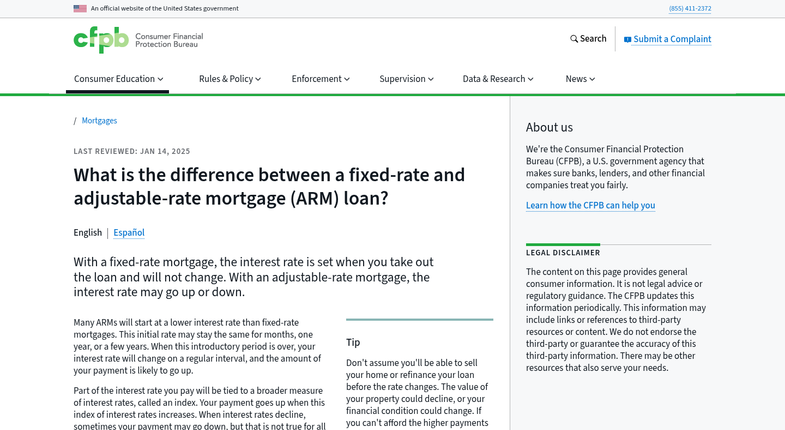
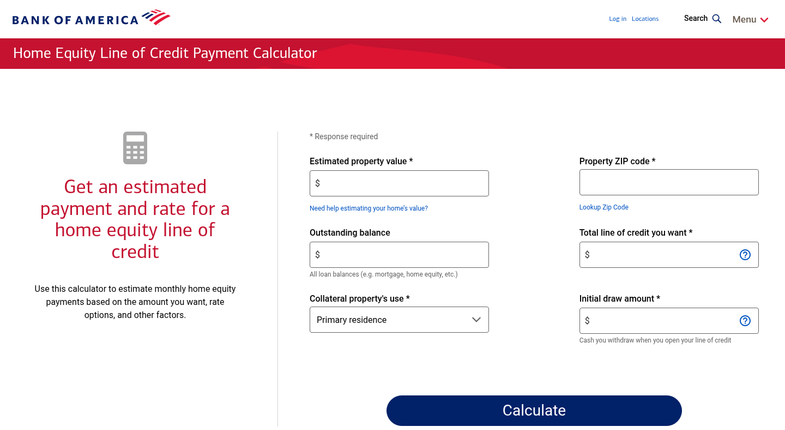
The draw structure of a HELOC is a different animal entirely. Instead of one fixed disbursement, you get access to a credit line and pull from it as needed. That has flexibility for variable costs. But flexibility is not necessarily what a borrower needs.
Consider a borrower with a HELOC at a $200,000 ceiling who only needs $80,000. If the line is mostly untouched, they technically have access to the full amount - but they’re carrying that ceiling on title. A future lender looking at available credit will factor that in when assessing risk - it can make a new loan harder to get even when the borrower hasn’t drawn against it.
That’s one reason some borrowers in that position refinance the HELOC into a fixed 2nd trust deed instead - it converts open-ended exposure into a known, closed obligation with a defined payoff date. Lenders treat that differently.
The draw structure also can affect discipline. An open line of credit can be tapped again after paydown, which extends debt exposure in ways a lump sum loan does not. A fixed disbursement has a start and an end. For borrowers who want a defined path to payoff, that structure is worth more than a lower rate on a revolving product.
Fixed Rate vs. Variable Rate - What the Difference Costs You Over Time
Home equity loans have a fixed rate, so your payment is the same from month one to the final payment. HELOCs are variable, which means the rate moves with the market and your payment moves with it. A second trust deed through a private lender sits in its own category - it usually carries a fixed rate. But that rate starts higher compared to what a bank would give you.
That higher starting rate is the part that gives pause. Fixed versus variable is about what a rate does over time - not just which number looks smaller on paper.
Take a HELOC at 8.5% where rates climb two and a half points over the next 18 months - you’re now at 11%. A private second trust deed at a flat 11.5% looked more expensive at the start. But the difference between those two options is now only half a point.
| Product | Starting Rate | Rate at Month 18 | Total Interest (18 months, $100K) |
|---|---|---|---|
| HELOC (variable) | 8.5% | 11.0% | ~$14,600 |
| Private 2nd Trust Deed (fixed) | 11.5% | 11.5% | ~$17,250 |
The private rate still costs more here. But the difference narrows as the variable rate climbs. If rates move three full points instead of two and a half, the HELOC closes that gap even more.

Cost certainty matters quite a bit when you’re working within a fixed budget or a short-term project timeline. A real estate investor who needs to carry a property for 12 to 18 months wants to know what the financing will cost from start to finish. A variable rate makes that harder to calculate and harder to plan around.
For longer timelines - say five to ten years - the math changes and the fixed rate on a home equity loan can become a benefit without the higher starting point of a private lender. The right structure depends almost entirely on how long you need the money and how much rate movement you can absorb. See how these options compare side by side in our 2nd trust deed vs. cash-out refinance breakdown.
Funding Timelines Side by Side - What the Data Actually Shows
The MBA’s 2025 Home Equity Lending Study found that the average home equity loan took 39 days to close in 2024. That’s a long time to wait when you have a contractor ready to start or a payment deadline coming up, and only about half of applications made it to the finish line.
Some bank and credit union lenders advertise 12 to 15 day closings. That can happen. But it applies to borrowers with strong credit, easy income documentation, and enough equity to make the underwriter comfortable. If your file has any complexity to it, plan for the longer end of that range.
Private 2nd trust deed lenders work a bit differently. They focus on the property’s value and the equity behind it instead of running every number through a traditional underwriting checklist, which is why most private lenders fund in 7 to 10 business days without much drama.
There’s also a third lane worth learning about. Tech-forward HELOC lenders like Figure use automated underwriting to close in as few as 5 days; it’s fast. But it works best when your financial profile is clean and steady.
| Loan Type | Typical Funding Timeline | Key Factor |
|---|---|---|
| Home Equity Loan (bank) | 30-45 days | Full income and credit underwriting |
| Home Equity Loan (fast lender) | 12-15 days | Strong borrower profile needed |
| HELOC (tech-forward, e.g. Figure) | 5 days | Automated underwriting |
| Private 2nd Trust Deed | 7-10 business days | Equity and property value focused |
The answer to “fastest” can depend on your credit profile, how much equity you have, and which type of lender you go to. A borrower with a 780 credit score and two years of W-2 income might do great with a tech lender. A self-employed borrower with a tough tax return might find a private 2nd trust deed far easier to get across the line in time.
To make this more concrete, let’s put San Diego numbers behind these paths.
San Diego Equity Scenario - Running the Numbers on a Real Property
Take a homeowner in San Diego with a property worth around $950,000. They have a $520,000 first mortgage and an existing HELOC with a $100,000 limit that’s about 60% drawn on - so roughly $60,000 is already in use. That puts their combined debt at about $620,000 before they borrow another dollar.
Their total equity is $330,000 on paper. But accessible equity is a different number, and that difference matters quite a bit here.
A bank or credit union will look at CLTV - combined loan-to-value - to figure out how much they’ll lend. Per MBA 2025 data, the average CLTV benchmark for a home equity loan approval is sitting around 51%. On a $950,000 home, that’s a maximum combined debt of about $484,500 - this homeowner is already at $620,000, so a traditional home equity loan is not available to them at this time.
That’s not an edge case. A lot of San Diego homeowners are in this position because property values are high but first mortgages are too, and HELOCs add another layer on top.
A private 2nd trust deed lender looks at this differently. Many will go up to 65% or 70% CLTV depending on the property and the borrower’s profile. At 65% CLTV on a $950,000 home, the maximum combined debt would be around $617,500; it’s nearly where this homeowner already stands, so even a private lender at 65% leaves very little room. At 70% CLTV, the ceiling moves to $665,000 - which opens up about $45,000 in possible borrowing above their current $620,000 balance.

It’s not a large number. But it’s the only path forward this borrower has if they need to pull equity out.
The tradeoff is cost. A private lender willing to go to 70% CLTV on a San Diego property will price that risk into the rate - expect something in the 9% to 13% range instead of the 7% to 8% a bank may have charged. The HELOC already on title also complicates things because a new 2nd TD lender would sit in third position unless that HELOC is paid off or subordinated first.
This scenario isn’t a worst case or a best case - it’s the equity picture San Diego homeowners actually have, and the numbers are what push the choice one way or the other.
Choosing the Right Second-Position Product Before the Window Closes
Speed is a convenience for every borrower - for some, it’s the whole point. A contractor who needs to start work before a sale closes, an investor who can’t afford to lose a deal to a slower buyer, a homeowner who has to fund a time-sensitive expense: these aren’t situations where “we’ll know in 45 days” is acceptable. If that’s you, optimizing for the lowest rate may actually cost you more in the end.
The clearest next step is an honest assessment of three things: how much equity you have, how quickly you need the money, and how much the rate differential matters to your bottom line. From there, the right product tends to choose itself. If you’re leaning toward a 2nd trust deed and want to know what terms you’d realistically qualify for, a no-obligation conversation with a local private lender is low-risk and faster than you’d expect.
FAQs
What is the difference between a home equity loan and 2nd trust deed?
A home equity loan operates through traditional bank channels with full income underwriting, while a 2nd trust deed through a private lender focuses primarily on property value and equity, allowing for faster funding and more flexible approval criteria.
How does an existing HELOC affect getting a new loan?
An open HELOC recorded on title holds a lien position, pushing any new loan into third position. Most traditional lenders won't approve a new loan behind an active HELOC, significantly limiting your borrowing options until the line is formally closed.
How fast can a private 2nd trust deed lender fund?
Private 2nd trust deed lenders typically fund in 7-10 business days by prioritizing property equity over traditional income underwriting, making them significantly faster than conventional home equity loans, which average 39 days to close.
Are private 2nd trust deed rates higher than home equity loans?
Yes, private 2nd trust deed rates typically start higher, ranging from 9%-13%, compared to bank rates of 7%-8%. However, since they are fixed-rate, they offer predictable costs that can become competitive if variable HELOC rates rise significantly.
Can San Diego homeowners with high first mortgages still borrow equity?
Traditional lenders may deny loans if combined debt exceeds their CLTV limits, which is common in San Diego. Private lenders offering up to 70% CLTV may provide the only viable borrowing path, though at higher interest rates.
Have Questions About Your Situation?
A 15-minute conversation can clarify whether a 2nd trust deed is the right tool for your goals.
Talk to Erik